
CH.00 / OPENING SIGNAL
the glow blend, decomposed
Three peptides. Three pathways. One unstudied stack. A plain-English reading of what the GHK-Cu, BPC-157, and TB-500 literature actually says — and what it carefully does not.
The plain signal
GLOW is not a drug. It is three separate research peptides — GHK-Cu, BPC-157, and TB-500 — co-packaged in a single vial by convention, not by any approved clinical protocol. GHK-Cu (the copper-tripeptide, Channel R on this site) is studied for skin matrix proteins — collagen, elastin, the structural scaffolding that keeps skin firm. BPC-157 (Channel G) is studied for tendon healing and new blood-vessel formation. TB-500 (Channel B) is a fragment of a natural protein that helps cells migrate and wounds close. Put the three together and the mechanistic rationale for the blend becomes visible: a matrix signal, a vascular signal, and a cell-mobility signal firing in parallel.
What that rationale is not is evidence. No peer-reviewed study has ever tested the three-peptide GLOW blend in a controlled trial. What people report from research communities — brighter skin, faster wound closure, easier recovery from a nagging injury — is covered honestly on the effects page, labeled clearly as anecdotal, not clinical evidence. This site exists to make the gap between the mechanistic thesis and the missing evidence visible.
What GLOW actually is
The first thing to know about the GLOW blend is that it is not one molecule. It is three.
Commercial research-chemical vials sold under the GLOW label are co-formulations of three separate peptides: glycyl-L-histidyl-L-lysine bound to copper (GHK-Cu), the fifteen-amino-acid pentadecapeptide BPC-157, and a seventeen-amino-acid synthetic fragment of thymosin beta-4 marketed as TB-500. Typical advertised mass is 50 mg GHK-Cu, 10 mg BPC-157, and 10 mg TB-500 per vial [16]. There is no covalent bond between the components. The 'blend' is exactly that — three peptides reconstituted in the same diluent.
The GLOW nickname is community-derived. It traveled outward from peptide forums and lay newsletters into a stable label for the three-component stack, and from there into vendor catalogs. No peer-reviewed paper uses the word. The branding is downstream of marketing, not biology [16].
Each component has its own decades-long research record. GHK-Cu was first isolated from human plasma in the 1970s and has the deepest cosmetic and matrix-remodeling literature of the three [2]. BPC-157 has a sprawling rodent dataset for tendon, vascular, and gut healing, plus three small human pilot studies [9]. TB-500 inherits the broader thymosin beta-4 evidence base, which includes a published Phase III ophthalmic trial [12]. What does not exist — anywhere in the indexed literature — is a single peer-reviewed study of the three together [16].
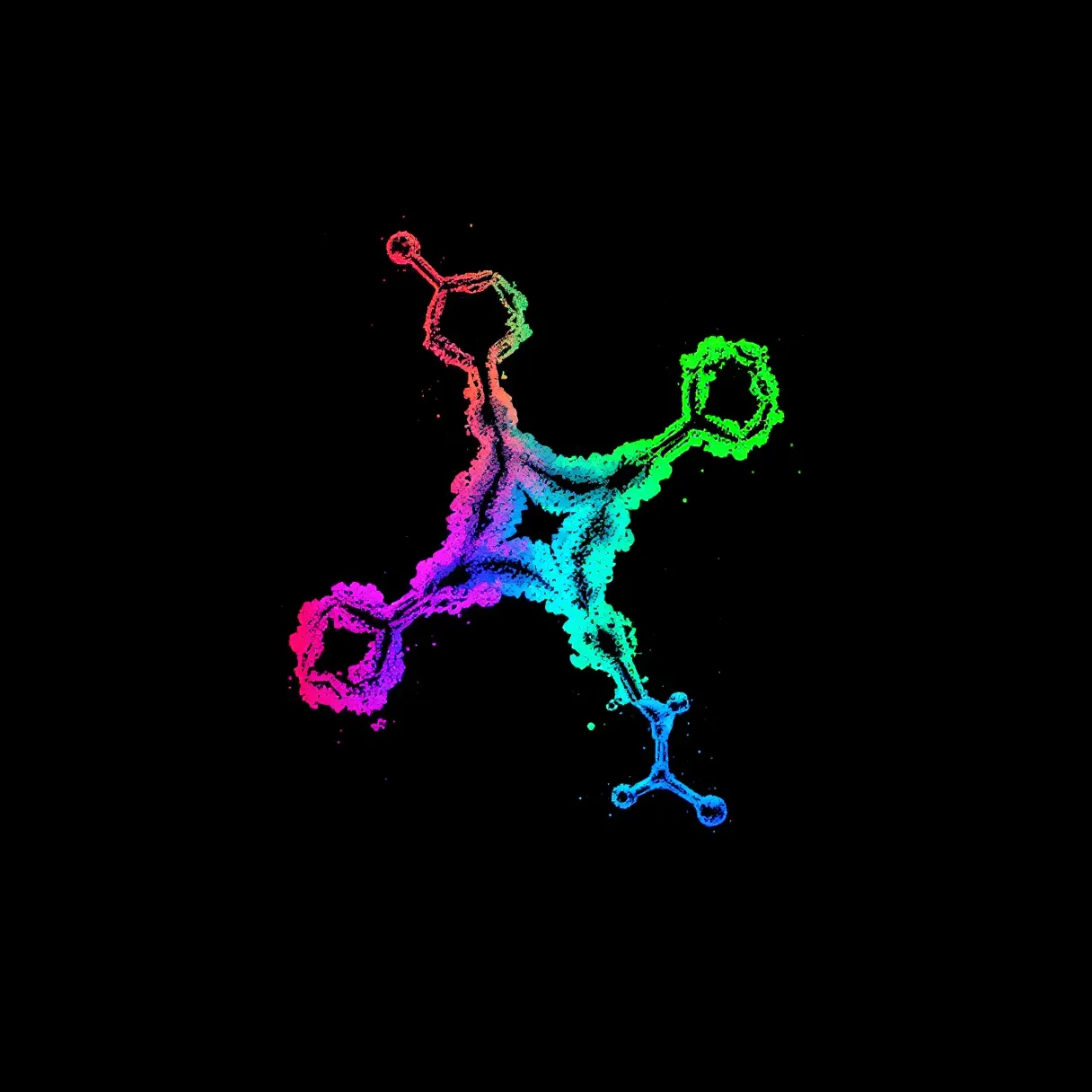
Three components, three channels
The clearest way to think about GLOW is as three independent repair signals firing in parallel.
Channel R — GHK-Cu is a copper-carrying tripeptide that modulates extracellular-matrix gene expression. In transcriptomic work using the Broad Institute Connectivity Map, GHK-Cu at 1-10 nM altered expression of roughly thirty-one percent of the human genome after twenty-four hours, with about fifty-nine percent of affected genes upregulated [2]. The downstream effect on the matrix is what you would expect from a signal that re-tunes collagen, elastin, and proteoglycan programs at once.
Channel G — BPC-157 is the angiogenic and cytoprotective member. The most-replicated rodent effect is upregulation of vascular endothelial growth factor receptor 2 (VEGFR2), with downstream Akt phosphorylation and endothelial nitric oxide synthase activation [8]. In a transected Achilles tendon model, intraperitoneal BPC-157 at 10 µg/kg accelerated tendon outgrowth and fibroblast migration [7]. Three small human pilots — knee pain (n=14), interstitial cystitis (n=12), intravenous safety (n=2) — round out the human dataset [9].
Channel B — TB-500 is a synthetic fragment of thymosin beta-4 spanning residues 1-17, the actin-binding domain. Full-length thymosin beta-4 binds monomeric G-actin one-to-one with nanomolar affinity, maintaining a free pool of unpolymerized actin that cells draw on to remodel their cytoskeleton during migration [11]. The fragment inherits the binding behavior; the parent molecule's clinical record (corneal Phase III, post-myocardial-infarction work in mice) supplies most of the supporting context [12][13].
The synergy claim that justifies stacking these three is mechanistic: matrix remodeling, capillary supply, and cell migration are three sequential requirements of wound repair, so a co-formulation that pushes all three at once might compress the timeline. That is a plausible hypothesis. It is not data.
What the GLOW combination has not been studied
Search the indexed literature for a clinical or preclinical study of the full GHK-Cu + BPC-157 + TB-500 combination and the result is empty [16]. No randomized trial. No controlled animal experiment. No published case series of the three-component stack. The per-component evidence does not transfer to the combination by inference, because dose-response, interaction, and timing all change when peptides are co-administered.
The two-component subset (BPC-157 + TB-500, often nicknamed 'Wolverine') is the most-cited stack in the lay literature, but it too lacks a controlled combination trial — what exists is a parallel set of single-component studies that practitioners pattern-match into a stack [16].
This is the editorial gap the design of this site tries to make visible. Each component card on this page carries a single-channel border — red, green, or blue. The three only superimpose at the very center of the composite plate above, and even there they almost-but-do-not-quite register. The visual vocabulary mirrors the evidence: three signals that have been studied separately, presented together by convention, with no published trial of the merged signal.
Regulatory posture — why telehealth GLOW is constrained
GLOW intersects three separate regulatory frames, and all three constrain the most-searched intent that brings readers to a page like this one: 'can I get GLOW via telehealth?'
First, the U.S. Food and Drug Administration added BPC-157 to its Category 2 bulk drug substances list in September 2023, citing concerns about immune reactions, manufacturing impurities, and the absence of human safety data. Category 2 status blocks 503A traditional compounding pharmacies and 503B outsourcing facilities from preparing the substance for human use [16]. TB-500 and injectable GHK-Cu are similarly restricted when intended for injection.
Second, the World Anti-Doping Agency classifies BPC-157 under S0 — Non-Approved Substances, prohibited at all times, no therapeutic-use exemption — and thymosin beta-4 (and by extension TB-500) under S2 — Peptide Hormones, Growth Factors and Related Substances, also prohibited at all times [16]. Tested athletes should treat the entire blend as banned.
Third, the FDA has not approved the full GLOW combination, any of its components, or anything resembling it for any human therapeutic indication. There is no labeled dose, no labeled route, no labeled population.
Telehealth prescribing of GLOW or its components for human use is therefore not consistent with the post-September-2023 regulatory landscape. This site publishes a sourced reading of the research and provides no telehealth services, prescriptions, referrals, or product sales. The 'telehealth' in the domain name is framing — a position the publisher occupies relative to a fast-moving prescribing landscape, not a service the site offers.
If you came here looking for a virtual clinic, you are in the wrong place. If you came here looking for what the research actually says about the three components and the still-empty space where the combination evidence would go, the rest of the site is for you.